


Keelback’s Vincent Rajiv Louis on Sustainable Investing Trends
Asia Pacific Trend Watch with Rajiv Louis
By Rajiv Louis
Vincent Rajiv Louis has built a powerful network of relationships throughout the Asia Pacific region with investment groups, corporations and NGOs. Indeed, Rajiv’s particular strength throughout his career has been to support these relationships with strategic ideas around the world – a strength he continues to deliver to several family groups particularly in Indonesia.
This is the second part of our conversation with Rajiv Louis, in which we further delve into his views on philanthropy and sustainable investing in Asia Pacific. Read part one of the article here.
Rajiv Louis: Millennials are changing philanthropy and sustainable investing in Asia
We discussed how philanthropy is still quite new in Asia. What is happening now is factors have started to change in a really positive way. One is the way Millennials approach this entire spectrum even before we were beset by the COVID pandemic. You were already starting to see changes because Millennials as a cohort are not behaving the way traditional investors or any other group have behaved in the past – that is, just looking at the bottom line or doing the minimum necessary to get to the endpoint. It's very meaningful to Millennials how businesses operate, and they're forcing corporations to think about sustainability, climate change and conservation. It’s the Greta Thunberg moment, and it’s having a fantastic ripple effect.
Rajiv Louis: The impacts of COVID-19 are here to stay
If there was one good thing that came out of the pandemic, it would be that the world lens has been pointed at the horrific dangers of human and animal conflict and the zoonotic diseases that eventually and necessarily come with it. The critical issues of sustainable development, climate action and conservation are front and center in the public discourse. We see genuine growth in the ESG side (Environmental, Social, and Corporate Governance) and the number of companies that are looking at their carbon footprints. Net Zero pledges have nearly doubled in less than a year from both local governments and corporations as many prioritize their commitment to mitigating climate change in a post-COVID-19 world. A report published by the Data-Driven EnviroLab and the NewClimate Institute highlights the massive increase in pledges with “a nine-fold increase for regions, with an additional 101 in 2020 from 11 recorded in 2019; an eight-fold increase for cities, with 823 more in 2020 from 100 recorded in 2019; and a three-fold increase for companies, with 1,541 in 2020 from around 500 recorded in 2019.”

Rajiv Louis: COP26 in Glasgow will drive the carbon conversation
At the UN Climate Change Conference COP26 in Glasgow starting in October, the world will be talking about carbon and how to force segments of the economy and corporations to be responsible for their carbon footprints and what that's going to cost. In addition, you have multiple countries talking about a carbon tax and voluntary carbon offsets starting first and foremost from the energy sector. Indonesia recently announced its carbon tax regime set to become effective in 2022. The benchmark tax is far too low in comparison to other countries, but the first step is always the hardest. Hopefully, increases to the base rate from this point forward will be more compassionate to the environment and give citizens something to cheer about. As the fossil fuel sector is forced into compliance, the focus is slowly but surely expected to shift to a raft of other emitting sectors, notably, airlines, shipping and cloud computing. Right now, Europe leads in both experience and price, followed by California’s cap trade system, the Regional Greenhouse Gas Initiative or RGGI in the Northeast US, and China, Australia and New Zealand have their own compliance markets. All of these are domestic-focused, and it's only a matter of time that other Asian, African and Latin American countries follow.
Rajiv Louis: Innovation is starting in the voluntary carbon markets but it’s still early days
It's still very early to tell because, especially on the carbon side, the market is still embryonic. The reason you're not getting a huge amount of innovation is that the size of the voluntary carbon market is still subscale for major financial intermediaries to focus attention on. Everyone knows it's coming, but it's not here yet. The major trading houses Trafigura and Glencore have already established carbon trading desks, and the likes of Goldman Sachs and others are threatening to do so. Major fossil fuel companies like Shell and BP have had trading desks for several years already – perhaps the most telling sign of all that a carbon tax on emitters is here to stay and far too low at current levels. As the investment banks set up shop for carbon trading, innovation will definitely follow by way of futures and options and standard trading contracts. You've seen the first installments of innovation in terms of green bonds and blue carbon bonds, and I think it will continue as the contracts and the products that investors can trade become more standardized.
Perhaps in the near future, we’ll see a carbon coin – if we have a Dogecoin why not a carbon one? Someone please shout out to Elon Musk, we need a carbon coin tweet from him!
Share:
You Might Also Like
Past 1.5°C: Why Indonesia’s Forests Matter More at COP31 Than Ever
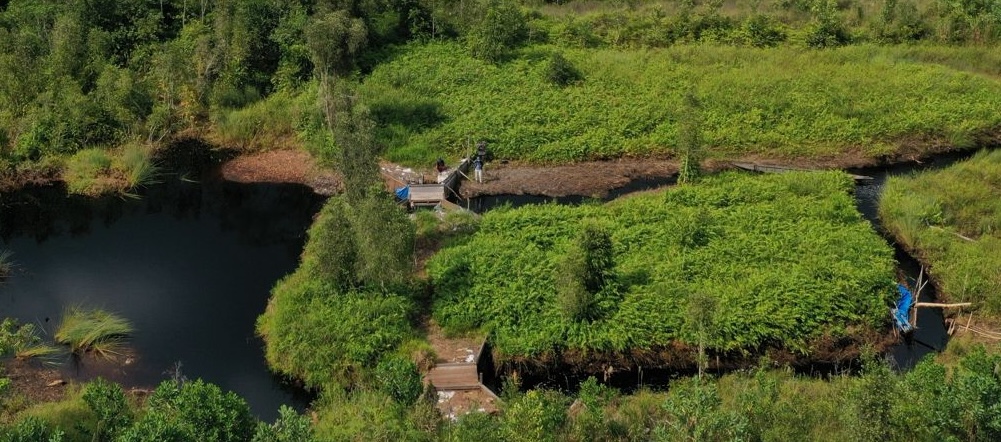
On 9 November, nearly 200 countries gather in Antalya for COP31. They arrive with a sentence that would have been unthinkable a decade ago. In its 2026 Emissions Gap Report, UNEP concludes that the chance of holding warming to 1.5°C with no or limited overshoot has passed. Its new benchmark is the lowest possible overshoot: a peak of around 1.7 to 1.8°C by mid-century, and a return to 1.5°C by 2100 with roughly even odds.I don’t read that as defeat, and I won’t fall into doomerism. I read it as a change in the task. When the target becomes the height and length of an overshoot, the measures that work fastest and cost least move to the centre of the agenda. Few work faster than keeping carbon in the ground where it already sits: in standing forests, in mangroves and, above all, in tropical peat.Indonesia holds more of that carbon than almost anywhere on earth. That is why I believe the land sector deserves far more attention in Antalya than it will likely receive. The new arithmeticThe numbers are stark. Under current policies, UNEP projects warming of about 2.8°C this century. Full delivery of every national pledge brings that to 2.6°C. Adding all net-zero targets gets us to 2.1°C.The UNFCCC’s synthesis of new national plans, published on 27 October, shows real progress: 127 new plans covering about 71 percent of global emissions. Yet the lowest overshoot pathway needs a 45 percent cut in emissions by 2035 against 2025 levels. Full delivery of the pledges gives 11 to 15 percent. Put simply, today’s plans cover between a quarter and a third of the cut required. The gap in 2035 is about 16 gigatonnes of CO₂ equivalent.Every five years of emissions at current levels adds roughly 0.1°C to the eventual peak. Time, not commitment alone, is now the scarcest resource. An energy shock reframes the debateDelegates also arrive in the middle of the largest oil supply disruption on record. The closure of the Strait of Hormuz earlier this year pushed Brent crude above $100 a barrel and turned an energy crisis into a fuel and fertiliser crisis for import-dependent economies.The COP31 presidency has made the most of that argument. Its flagship 35-by-35 pledge aims to raise electricity’s share of final energy from about 23 percent today to 35 percent by 2035. The logic is security as much as climate: power generated at home does not pass through a contested strait.I would apply the same logic to nature. A hectare of peat kept wet is a national asset that no blockade can touch. It protects water supply, cuts fire risk and haze, and keeps carbon locked away. Climate security and national security are converging. Natural capital belongs in that conversation. The finance gap is the real negotiationEvery priority in Antalya runs through finance. The new collective climate finance goal agreed in Baku sets at least $300bn a year by 2035, with an aspiration of $1.3 trillion from all sources. The gaps beneath that headline are wide:Adaptation: developing countries need $310bn to $365bn a year by 2035. International public adaptation finance was about $26bn in 2023.Forests: UN figures cited in Brazil’s new forest roadmap put the need at about $300bn a year by 2030 to halt and reverse deforestation, against roughly $85bn available today.Public budgets: several major donors are reducing aid at the same moment that import bills are rising.Public money alone will not close these gaps. Private capital will, but only where the rules are clear, the assets are credible and the risks are understood. This is why the carbon market and finance discussions on 13 November matter so much to those of us investing in nature. Indonesia’s stakeIndonesia arrives at Antalya with a substantial agenda. Its Second NDC, submitted in October 2025, sets emissions to peak in 2030 and to fall to between 1,258 and 1,489 Mt CO₂e by 2035, including land use. It retains the FOLU Net Sink 2030 target of 140 Mt CO₂e of net removals from forestry and land use, and sets net zero by 2060. The government estimates the investment needed to reach its 2035 targets at about $472.6bn, drawing on private investment, international finance, carbon markets and blended structures.Indonesia has also positioned itself as a hub for high-integrity carbon markets, with a regulated domestic market, a blue carbon roadmap launched at COP30, and entry into international carbon markets planned for 2027. That is a clear signal to investors, and a welcome one.The land sector will decide whether the 2035 range is met. This year’s fire season was a reminder of what is at stake: MapBiomas mapped more than 1.1 million hectares burned nationally between January and September. Fire is where land-use emissions are won or lost, and drained peat is where fire does the most damage.Canal in HendaMajor Canal in Desa Garung What good looks like from the groundAt PAN, we invest in and co-develop nature-based solutions in Indonesia. Our peatland restoration work in Central Kalimantan has taught me three things that I would like every negotiator in Antalya to hear.Tenure comes first. In our project the social forestry licences reside firmly with the community groups themselves, not with PAN or any outside investor. When the people who live on the land hold the rights, they hold the stake, and the project is built to last.Restoration beats avoidance alone. Blocking and rebuilding drainage canals to rewet degraded peat is physical, measurable work. It cuts fire risk and emissions at the same time, and it protects habitat for species such as the critically endangered Bornean orangutan. As the current fire season, intensified by El Niño, is showing, rewetting peatlands in Central Kalimantan is the only lasting protection against the recurring fire risk. Canal blocking is expensive work that requires capital – capital that for many of these projects will only come through carbon finance.Integrity is the product. Buyers, regulators and communities all want the same thing: credits that represent real, additional, durable outcomes. Rules that reward integrity will attract the capital that the forest finance gap demands. What I will be watching in Antalya13 November, finance and trade: progress on carbon market rules and a structured start to the climate finance work programme.17 November, ocean, nature and land use: whether nature and ocean action move inside the formal negotiated texts, and whether forest finance commitments match the scale of the need.18 November, just transition: a working mechanism with defined functions, a host and a route to finance, including for communities who depend on land.20 November, cover decision: a clear reference to the transition agreed in Dubai, and the launch of the second global stocktake. The overshoot is a deadlineAntalya will not close the emissions gap. No single conference can. What it can do is decide whether the rules and the money finally point at the places that can close it fastest.Indonesia’s forests and peatlands are among those places. They are ready for investment. The communities who steward them are ready to lead. What they need from Antalya is a framework that rewards them for doing so.If we are going to overshoot, let us make it as short as possible. Nature is how we start. My thanks to The Landscape Group for their well-documented Landscape 360 briefing.Figures in this article are drawn from Landscape 360’s COP31 briefing (4 November 2026), which compiles data from the UNEP Emissions Gap Report 2026, the UNFCCC 2026 NDC synthesis report, the IEA, the Government of Indonesia’s Second NDC, the COP30 presidency’s forest roadmap and MapBiomas Fire.Rajiv Louis is a Jakarta-based investor in nature-based solutions and CEO of PAN (Pelindung Alam Nusantara), which works on wildlife, forest and peatland conservation across Indonesia.
Paying for Wildlife That Is Still There: Why Indonesia Needs Outcome-Based Conservation Finance
A few weeks ago, the Rob Walton Foundation committed $4.6 million to an outcomes-based grant across four African landscapes managed by African Parks. On the surface it is a philanthropic grant like many others: money for biodiversity monitoring, community development and park infrastructure. What makes it different is how success is measured, and what triggers the funding.The grant uses Verifiable Nature Units, or VNUs, as its proof of performance. In plain terms, the money is tied to evidence that nature on the ground is being maintained or improved, not simply to evidence that activities took place. For anyone who has spent time around wildlife conservation finance, that is a meaningful shift.I believe it is a shift Indonesia should be studying closely, and acting on. What a VNU actually measuresThe VNU methodology, developed by African Parks, combines two lenses. The first is habitat intactness: how much of a landscape remains free of persistent human pressure such as clearance, roads and encroachment, tracked through satellite and remote-sensing data. The second is indicator species: repeated, on-the-ground monitoring of carefully selected species that reflect the health of the wider ecosystem. The framework is designed for independent verification.The methodology is set out in a peer-reviewed, open-access paper by the African Parks team and colleagues, published in the journal Land in July 2026: “Verifiable Nature Units (VNUs): A Scalable Outcome-Based Framework for Valorising Natural Capital” (https://doi.org/10.3390/land15071305). It is well worth reading for anyone working in nature finance.Just as important is what VNUs are not. As Duko Hopman of the Rob Walton Foundation put it, nature is not fungible. A square kilometre of Congo Basin forest is not interchangeable with a square kilometre of Chadian savanna. VNUs are not a complete measure of biodiversity, and for now they serve as performance evidence for philanthropic grants, not as tradable instruments. That candour is a strength. It is exactly the kind of integrity-first approach that nature finance has too often lacked Why this matters for IndonesiaIndonesia is one of the most biodiverse countries on the planet, and it carries some of the world’s most irreplaceable species:Javan rhino: fewer than 80 animals, and possibly far fewer, all in a single place, Ujung Kulon National Park.Sumatran rhino: fewer than 50 remaining, scattered across Sumatra and Kalimantan.Orangutans: all three species, Sumatran, Tapanuli and Bornean, are critically endangered. The Tapanuli, found only in the Batang Toru forests, is the rarest great ape on Earth.Sumatran tiger: the last of Indonesia’s tigers, holding on in the forests of Sumatra.Sumatran and Bornean elephants: forest giants that shape the landscapes they move through.Sunda pangolin: critically endangered and among the most trafficked mammals in the world.Protecting these species takes long-term, predictable funding. Too much conservation funding, globally, still arrives in short grant cycles, where fundraising prowess and relationships decide how well a landscape is resourced. Meanwhile, the nature finance that does reach Indonesian forests is largely built around results-based payments (RBP) and carbon. RBP and carbon finance have done real good, but a tonne of avoided emissions does not guarantee that a single rhino, tiger or orangutan is still on the landscape. Biodiversity needs its own measure of success. Why the methodology fits Indonesia so wellThe VNU approach relies on two things: credible remote sensing of habitat, and credible field monitoring of indicator species. Indonesia is well placed on both.Indonesia’s forests are among the most closely monitored in the world from space. On the ground, Indonesia’s national parks and partner organisations have built up strong field capability over decades: camera-trap grids, rhino protection units (however, the ranger patrol networks need work), and long-running population surveys. Indonesia has also developed collaborative management partnerships that allow government park authorities to work alongside conservation partners.Indonesia’s marquee species map naturally onto the functional groups the methodology uses. Rhinos and elephants are keystone engineers. The Sumatran tiger is an apex carnivore. Orangutans are habitat specialists whose presence tells you a great deal about forest health. The pangolin, like the orangutan, is a highly vulnerable sentinel species whose survival reflects how well a landscape is protected from poaching and trade. Few countries could assemble a more compelling set of indicators. Where Indonesia could startA credible first step would be one or two pilot landscapes, chosen for their ecological importance and the strength of their existing monitoring:Ujung Kulon, where the entire world population of the Javan rhino depends on a single protected area.The Leuser Ecosystem, the only place on Earth where Sumatran orangutans, tigers, elephants and rhinos still share the same forest.Way Kambas and Bukit Barisan Selatan, critical strongholds for Sumatran rhinos, tigers and elephants.The peat swamp forests of Central Kalimantan, including Sebangau and Tanjung Puting, home to some of the largest Bornean orangutan populations.Across all of them, the pangolin could serve as a cross-cutting indicator of how well wildlife is protected from trade. Five principles for getting it rightAdapt, don’t copy. The methodology should be adapted to Indonesian ecosystems with Indonesian scientists, universities and park authorities at the table from day one.Start where VNUs stand today. Begin with outcome-based philanthropic grants before moving towards blended or capital-market finance.Communities first. Strong social safeguards and clear benefit-sharing for masyarakat adat and forest communities must be built in, not bolted on.Stack, don’t compete. Pair biodiversity outcomes with Indonesia’s existing carbon and peatland programmes, so the best projects are rewarded for both.Learn in the open. Share results, including what does not work, and never scale faster than integrity allows. Paying for wildlife that is still thereThe idea at the heart of outcome-based conservation is simple: pay for wildlife that is still there, and for forests that are still standing. The world’s leading wildlife conservation organisations are now building the tools to measure that credibly. Indonesia has the species, the science and the monitoring infrastructure to put those tools to work.The funding gap for Indonesian wildlife is wide. Tools like VNUs will not close it on their own, but they could help unlock the long-term, results-based finance that the Javan rhino, the Tapanuli orangutan and the Sumatran tiger urgently need. Indonesia should be the first country in Asia to put this approach to the test.Further reading for the curious: Greyvensteyn, J., van der Laarse, M., De Beenhouwer, M., Leutner, B. and Naude, V.N. (2026). Verifiable Nature Units (VNUs): A Scalable Outcome-Based Framework for Valorising Natural Capital. Land, 15(7), 1305. https://doi.org/10.3390/land15071305The views expressed here are my own.